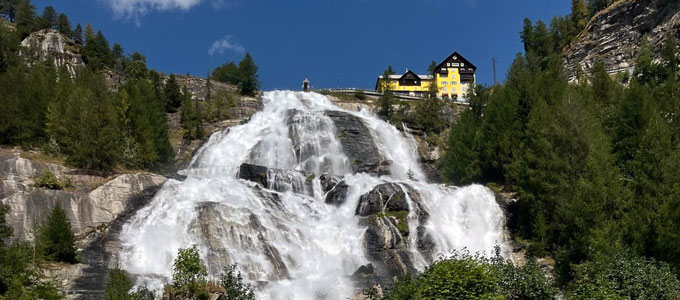
The Toce Waterfall and the Formazza Valley represent one of the most evocative and spectacular sites in the Piedmont Alps, a region where nature, history, and traditions intertwine, creating a captivating tourist experience.
Located in the far north of Piedmont, on the border with Switzerland, the Formazza Valley is one of the highest valleys in Italy and retains a strongly distinct cultural identity.
The valley has been inhabited since the 13th century by people of Walser origin, originating from the Swiss Upper Valais. These settlers brought with them a language, Töitschu, still spoken today in some hamlets, as well as customs, architecture, and Alpine lifestyles based on livestock farming and communal land management. The typical Walser buildings of wood and stone, the compact villages, and the bilingual place names still bear witness to this historical legacy, which constitutes one of the valley's greatest cultural attractions.
The Toce Waterfall, also known as "la Frua," is the most famous natural symbol of the Formazza Valley and one of the highest and most impressive waterfalls in Europe. With a drop of approximately 143 meters, the waterfall offers a spectacle of extraordinary power and beauty, especially during periods of peak flow. Since the 19th century, the Toce Waterfall has been a destination for illustrious travelers, artists, and writers, drawn by its grandeur and pristine Alpine setting. The presence of historic structures such as the Belvedere Hotel, built in the early 20th century, testifies to the site's already significant touristic significance.
Historically, the Formazza Valley has always been a border and transit area. Alpine passes, such as the Gries Pass, fostered trade and cultural exchanges between Italy and Switzerland over the centuries, contributing to the valley's economic development. In the 20th century, the construction of major hydroelectric plants partially altered the landscape, but also brought new job opportunities and infrastructure, integrating over time with the surrounding environment.
Today, the Formazza Valley is a popular tourist destination in all seasons. In summer, it offers a vast network of hiking trails, nature itineraries, and trekking and mountaineering routes, allowing you to explore alpine lakes, pastures, and spectacular peaks. In winter, the valley's towns become ideal destinations for skiing, snowshoeing, and other snow-based activities, while maintaining an authentic and uncrowded atmosphere.
The Toce Waterfall and the Formazza Valley represent a unique heritage, where the grandeur of nature combines with centuries-old history and living traditions. A place capable of offering visitors not only unforgettable views, but also a profound connection with Alpine culture and the slow, authentic pace of life in the mountains.
How to reach The Toce Waterfall from hotel Edelweiss in Bognanco Terme
Gallery